
Eqo
What if your feed was bounded by your legs, not an algorithm?
- Role
- Sole product designer, concept through prototype
- Team
- Solo
- Timeline
- 2024, self-directed
The one-minute version
The problem
A feed can put you in a room with a hundred thousand people and still leave you with nobody to call on a Saturday.
What I designed
A feed bounded by 5 km, where every number you can raise has to be earned by being somewhere.
My ownership
- 1Market sizing and research
- 2The reward model
- 3IA and interface
- 4A clickable build people held in their hands
Outcome
10+
People who held the prototype, on their own phones, in their own streets
4
Screens carrying the whole model: feed, map, circles, profile
$1.19b
Serviceable market the concept was sized against, before a screen was drawn
0
Follower counts anywhere in the product, on purpose
The long version, about five minutes
Context
Social media made the world smaller. It made our streets stranger.
The platforms optimised for reach, because reach is what sells. Proximity was never the unit, so the people you could actually walk to are the ones you are least likely to hear from.
The fragmented self
Nobody posts the version of themselves that walks to the shop.
The market gap
Location-based social is not an empty category, but the products in it are dating apps or check-in apps.
The third place
The places people used to gather in for no reason are closing, and the replacements are transactional.
The idea
How might we make being somewhere worth more than posting about it, without asking anyone to put their phone down?
Eqo starts from the opposite constraint: a feed bounded by 5 km, where every number you can raise has to be earned by being somewhere. That one rule decides everything else, and it makes most of the conventions of the category unusable.
The logo is a speech bubble that unfolds into a key.
It opens as a conversation and resolves into a key, and the line that lands underneath it is “Unlock your World”. The city is treated as locked: blocks are locked, places are locked, rooms are locked, and the only thing that opens any of them is being physically there.

Two frames of the launch animation. The bubble unfolds, the shape becomes a key, and the promise arrives on the second beat. The key comes back as the pin type on the map.
Four promises, one per swipe
Onboarding usually explains an interface. These four slides explain the deal, and each one is answered by exactly one of the four screens that follow.
- a.
 DiscoverWhat is happening within walking distance, including the parts your own circle would never post.
 - b.
 CompeteA leaderboard small enough that finishing first is actually available to you.
 - c.
 BecomeAn identity built out of places you have been, not an audience you have gathered.
 - d.
 BelongRooms that turn into groups, with the people you already know kept one tap away.
a.Discover
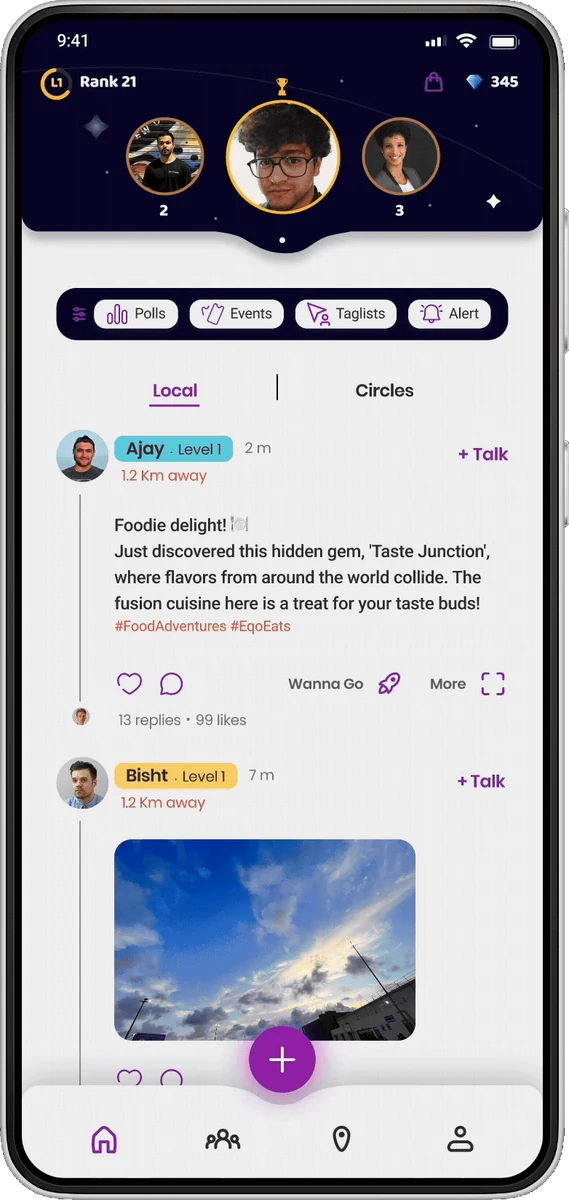
A feed that opens with a leaderboard
The first thing above the posts is a podium: your rank inside the 5 km and the two people ahead of you. Putting the standing before the content is the argument in one screen. You are not here to scroll, you are here to move up, and the only way up is out.
- Every post carries a distance where a timestamp would be. “1.2 km away” is the fact that decides whether you act on it.
- The reaction row is Heart, Reply and Wanna Go. Only the third costs you a walk, and only the third moves your rank.
- Local is the default tab and Circles is second, so the product opens on strangers nearby rather than on people you already follow.
b.Compete
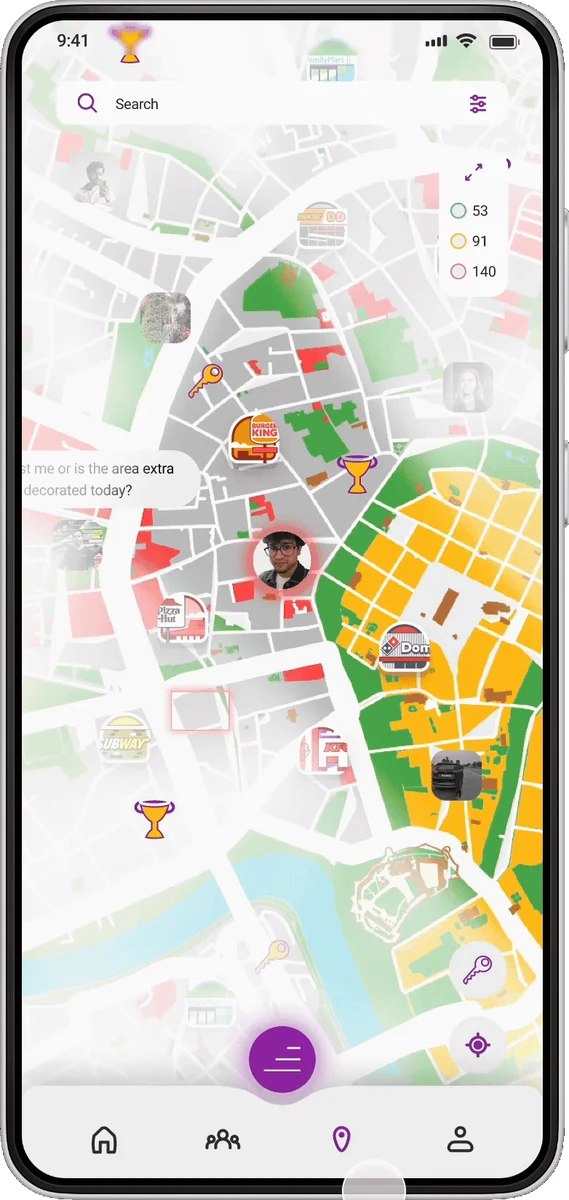
A map that treats the city as locked
Neighbourhoods fill with colour as they are captured, and a block can only be claimed by standing on it. It is the mechanic that keeps the product physically honest: there is no way to farm the map from a sofa, and the keys scattered across it are the same shape as the logo.
- Territory is drawn as fill rather than as pins, so the state of the game is legible before you read a single label.
- The pins are keys, trophies and places. There is no pin for a person other than your own.
- Precision stops at the block. Close enough to arrange to meet at, never close enough to follow someone home.
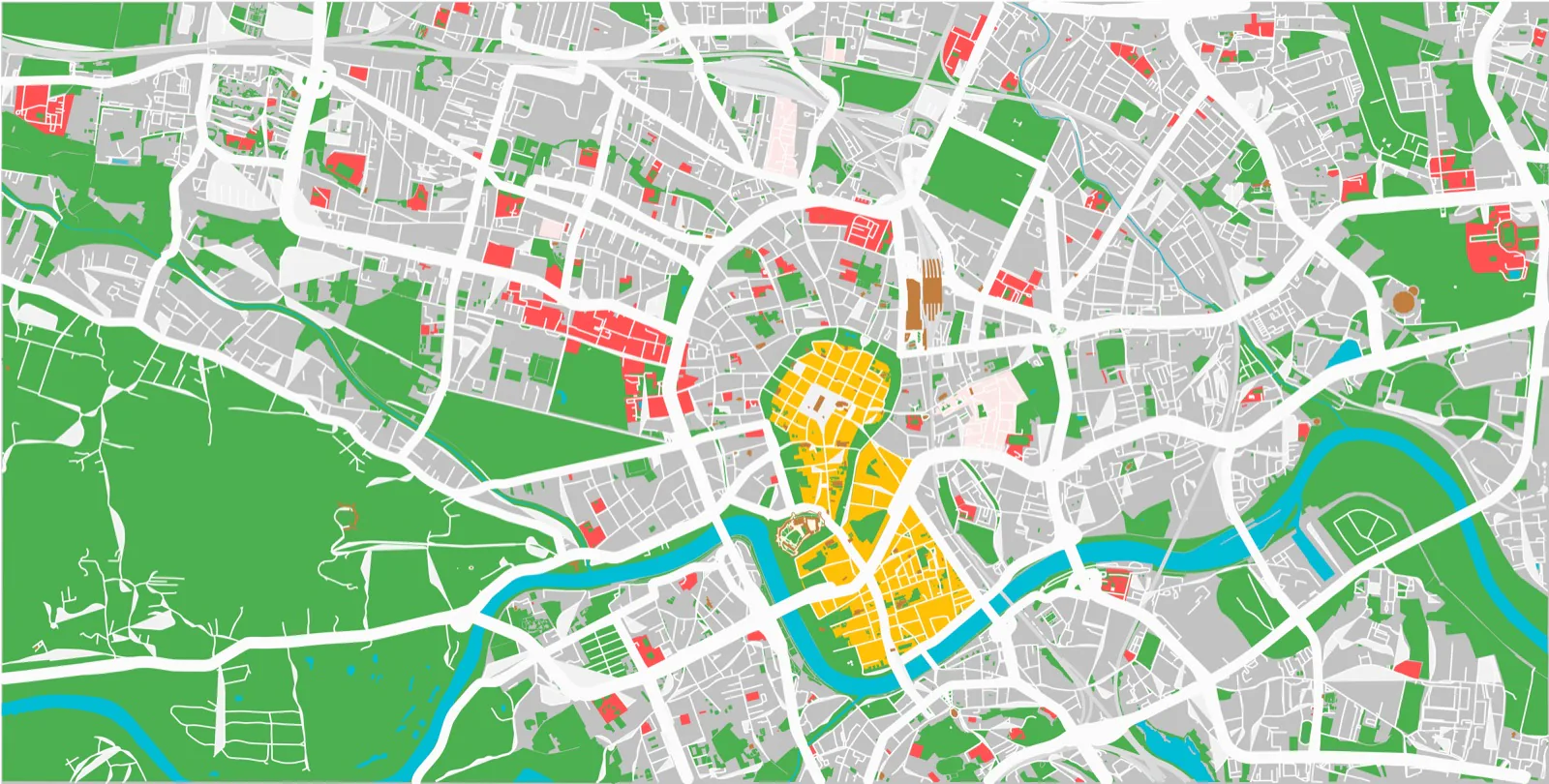
The territory layer on its own. Yellow is claimed, and at the start of a game almost nothing is. That is the honest picture of what a 5 km product looks like on its first day in a neighbourhood.
c.Become
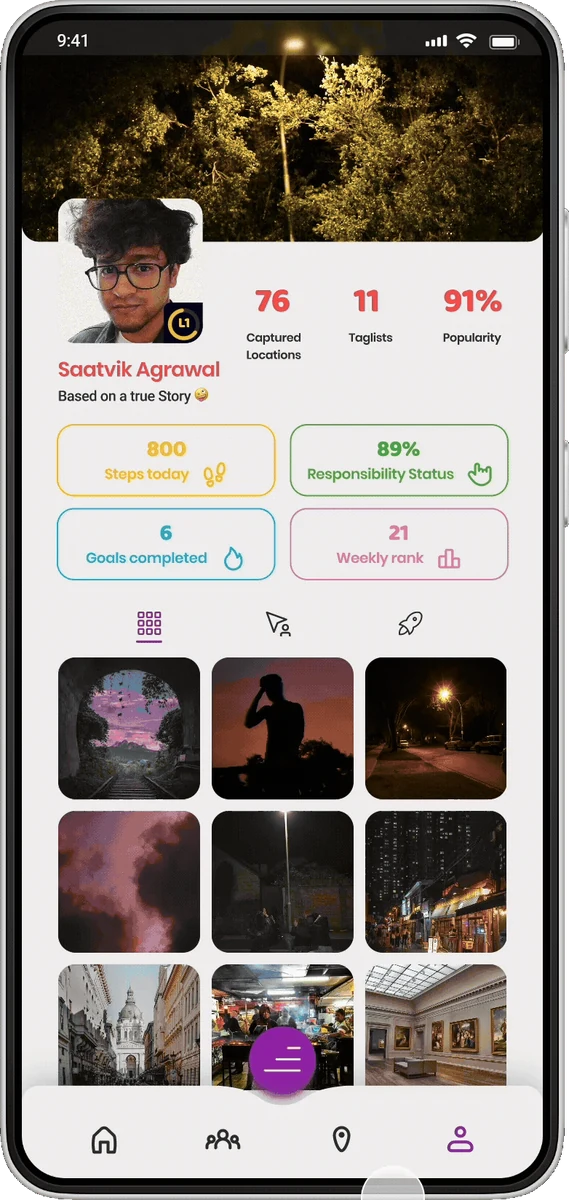
A profile measured in places
The three numbers under the avatar are Captured Locations, Taglists and Popularity. Two of them can only be raised by going somewhere, and the third is a read on how the neighbourhood responds to you.
- The four cards below report the week: steps, responsibility, goals completed, weekly rank. The profile is a scoreboard, not a shopfront.
- The grid underneath is places, not portraits. A profile here is the map of where somebody has actually been.
- Taglists are collections of places a person stands behind, and they are how one user's Saturday becomes another user's route.
d.Belong
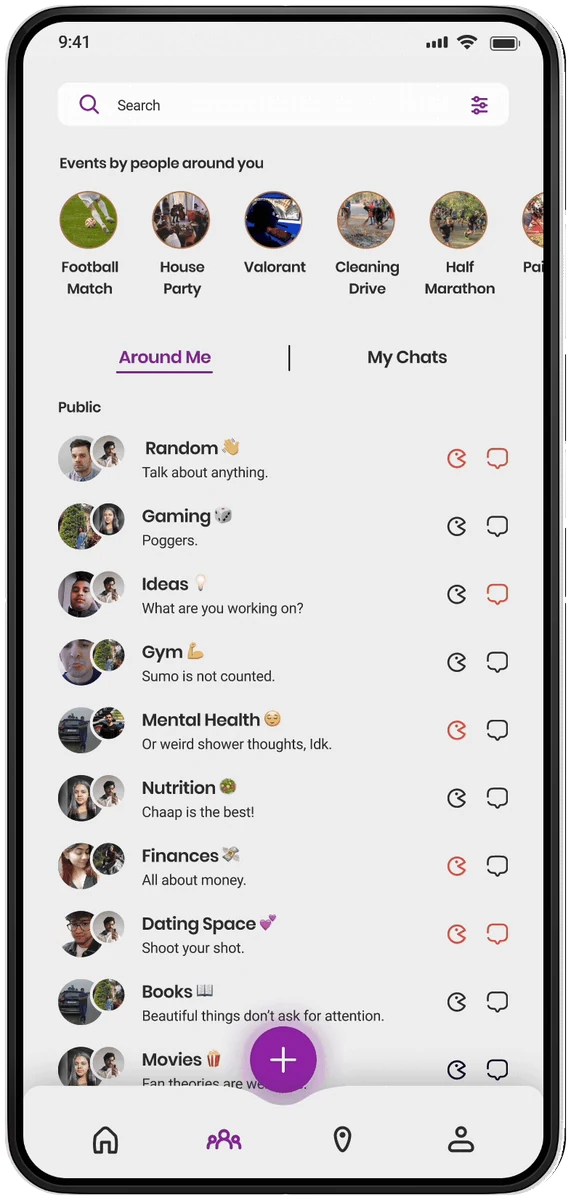
Rooms you could walk to
Circles are public rooms named after the subject rather than the host. Random, Gaming, Ideas, Gym, Mental Health, Nutrition, Finances, Dating Space, Books, Movies, Travel. Joining one asks nothing of you except that you are inside the radius, which is what makes it possible to arrive with no profile and no reputation.
- Every room carries a one-line description written in the voice of the room, not the platform. Gym is “Sumo is not counted.” Travel is “Be travelers not tourists.”
- No room has an owner in the interface. No host avatar, no member count, nothing to accumulate inside.
- A direct message is a request before it is a thread. Someone wants to talk, and you decide.

Events by people around you runs above the rooms, because an event is the version of a room you can physically attend. A cleaning drive and a Rahagiri sit in the same row as a Valorant session, which is what a real neighbourhood's Saturday actually looks like.
Trade-offs
The hardest part was restraint.
Every session produced a good reason to add a follower count, a streak, a direct message that skipped the request, a story. Each one, taken on its own, would have improved a metric. Together they would have rebuilt the product Eqo exists to be an alternative to.
A follower count
A follower is a number you can raise without leaving the house, and any screen that showed one would be quietly telling users that the rule was negotiable.
A streak
A streak you get penalised for breaking turns going outside into an obligation.
A message that skips the request
A direct message is a request before it is a thread. Someone wants to talk, and you decide.
An exact location
Privacy came up every time; the answer that satisfied it was the block-level map. Precision stops at the block. Close enough to arrange to meet at, never close enough to follow someone home.
Testing
Ten people, their own phones, one prototype running in a browser.
The concept went out before it was drawn, because a location-bounded feed either makes immediate sense to somebody or does not.
Then the prototype went into their hands, on their own devices. Testing this at a desk would have told me nothing, because the thing under test is whether a screen can get somebody to stand up.
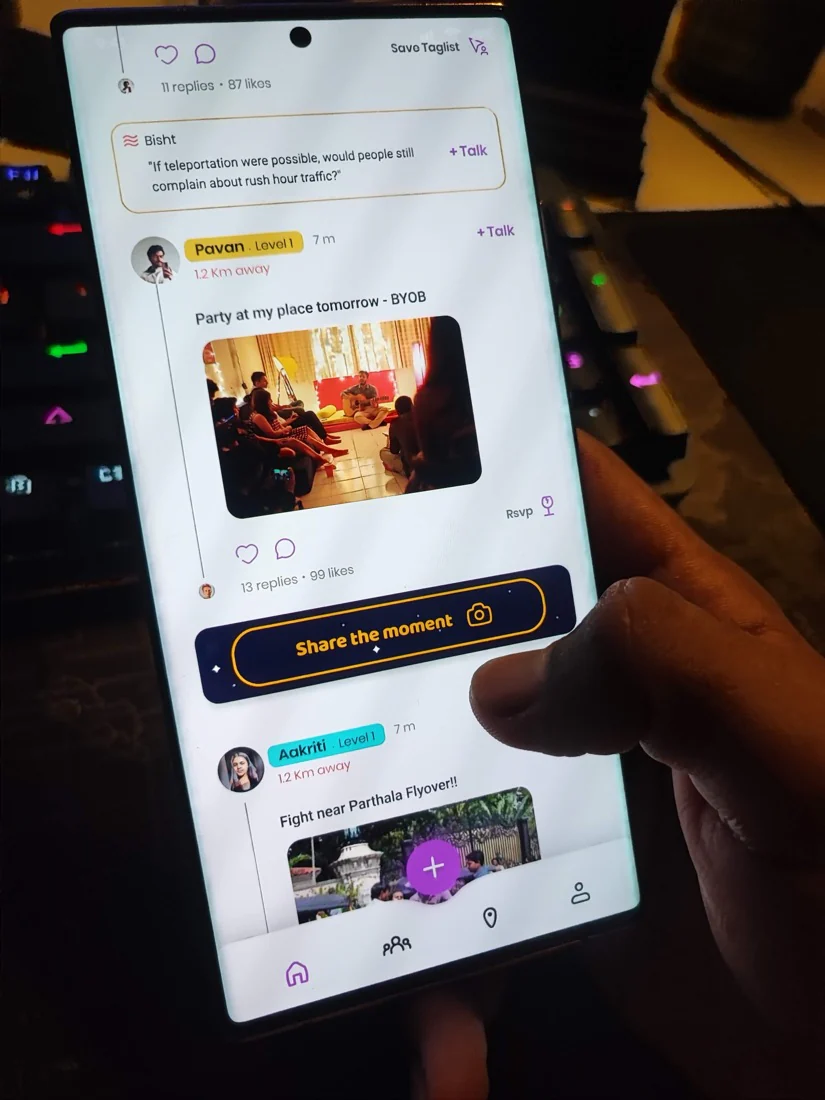
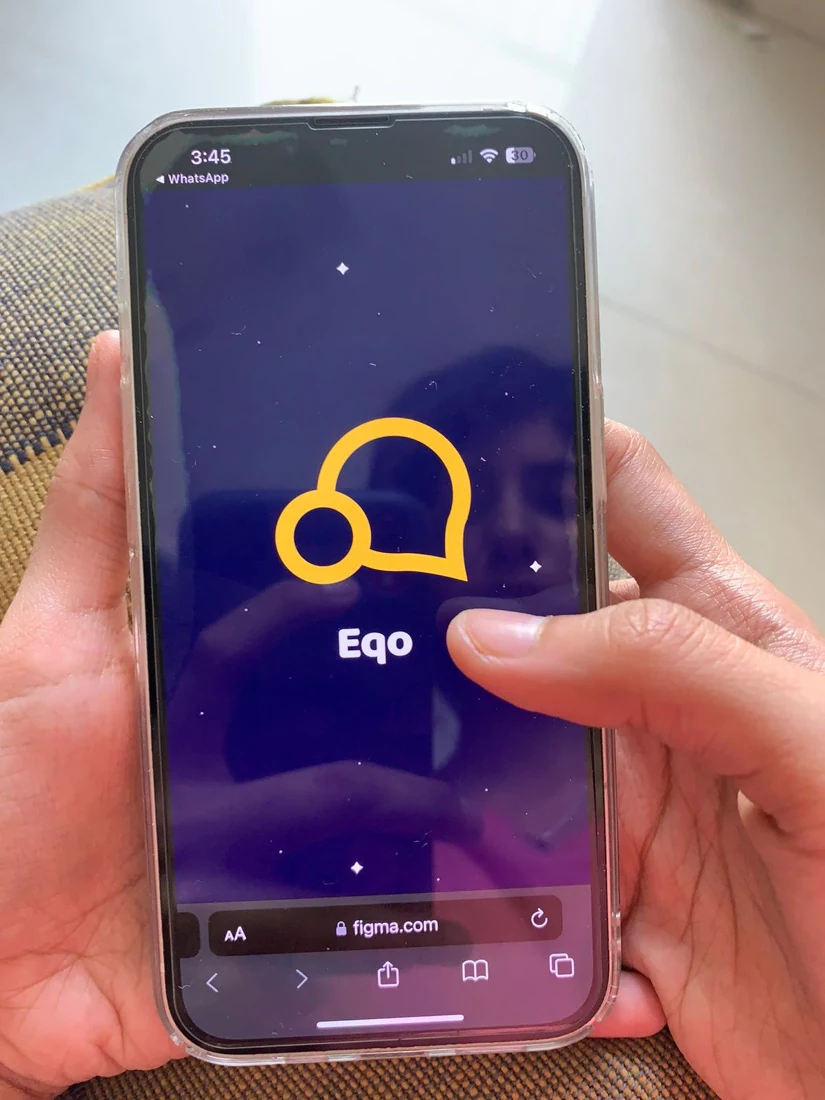
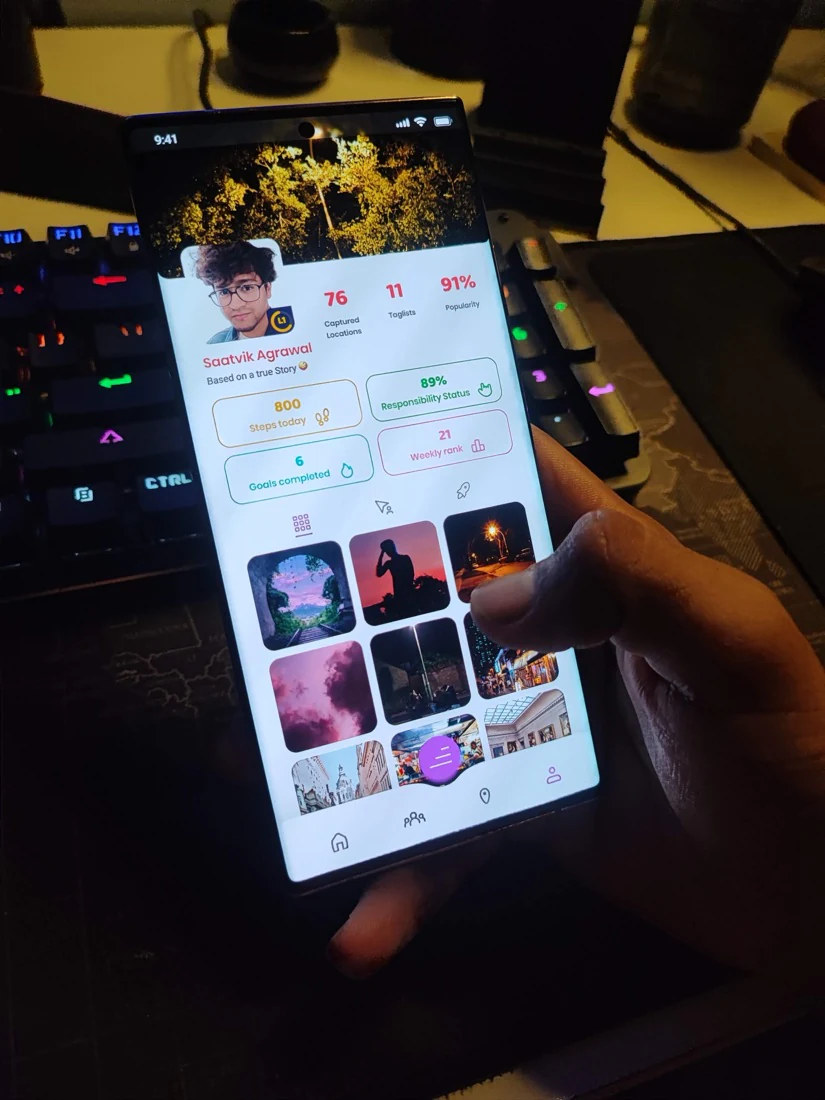
Sessions ran on the participants' own handsets with the Figma prototype open in the browser. Nothing was moderated from a laptop.
“This is the first social app that made me want to close it and go outside.”
Outcome
A location-first social concept that rewards physical presence over posting. Concept-tested with 10+ users.
10+
People who held the prototype, on their own phones, in their own streets
4
Screens carrying the whole model: feed, map, circles, profile
$1.19b
Serviceable market the concept was sized against, before a screen was drawn
0
Follower counts anywhere in the product, on purpose
Reflection
1. What I would take forward is the discipline of writing the one rule down first, and treating anything that violates it as a request to decline rather than a trade-off to balance.
2. The open question is the cold start. A 5 km leaderboard with four players on it is not a game, and the honest next step is not a screen, it is a plan for the first neighbourhood.
More work
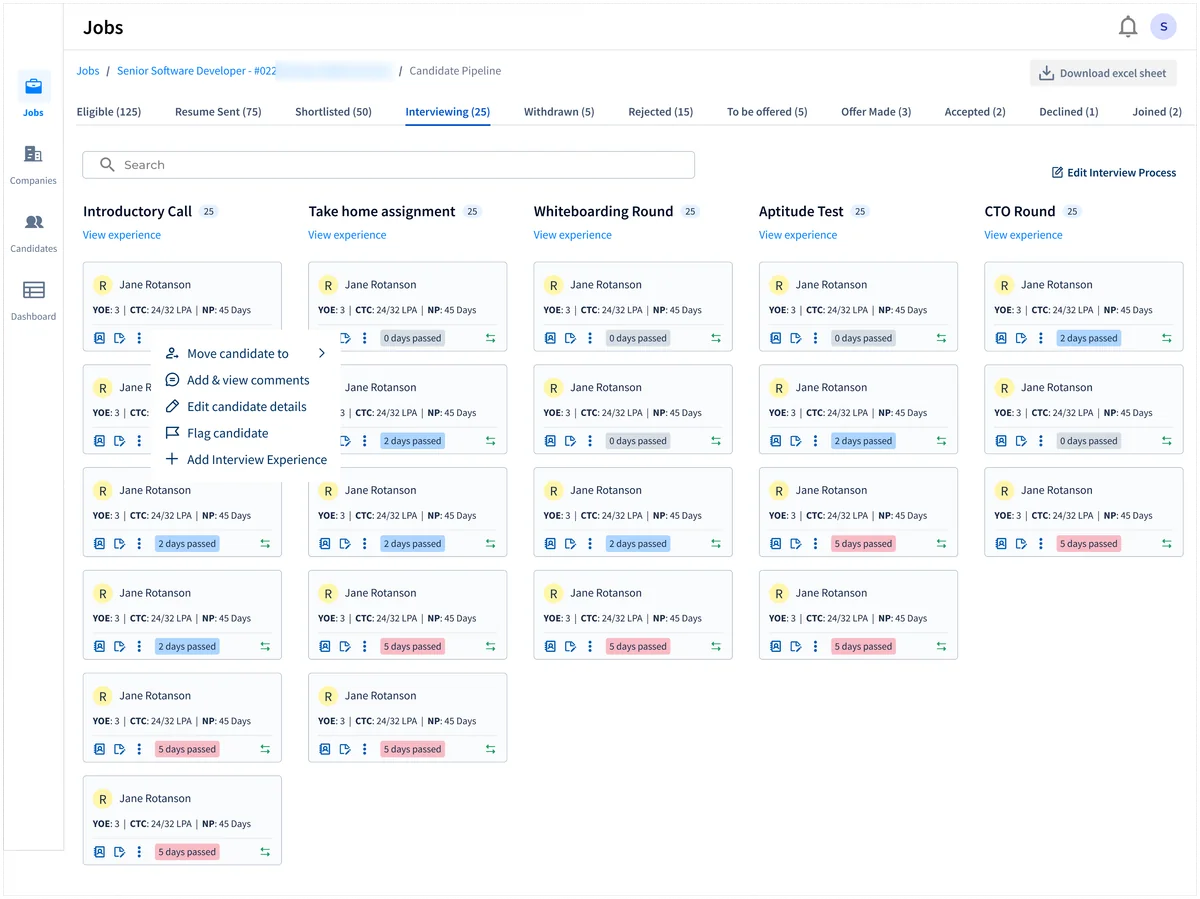
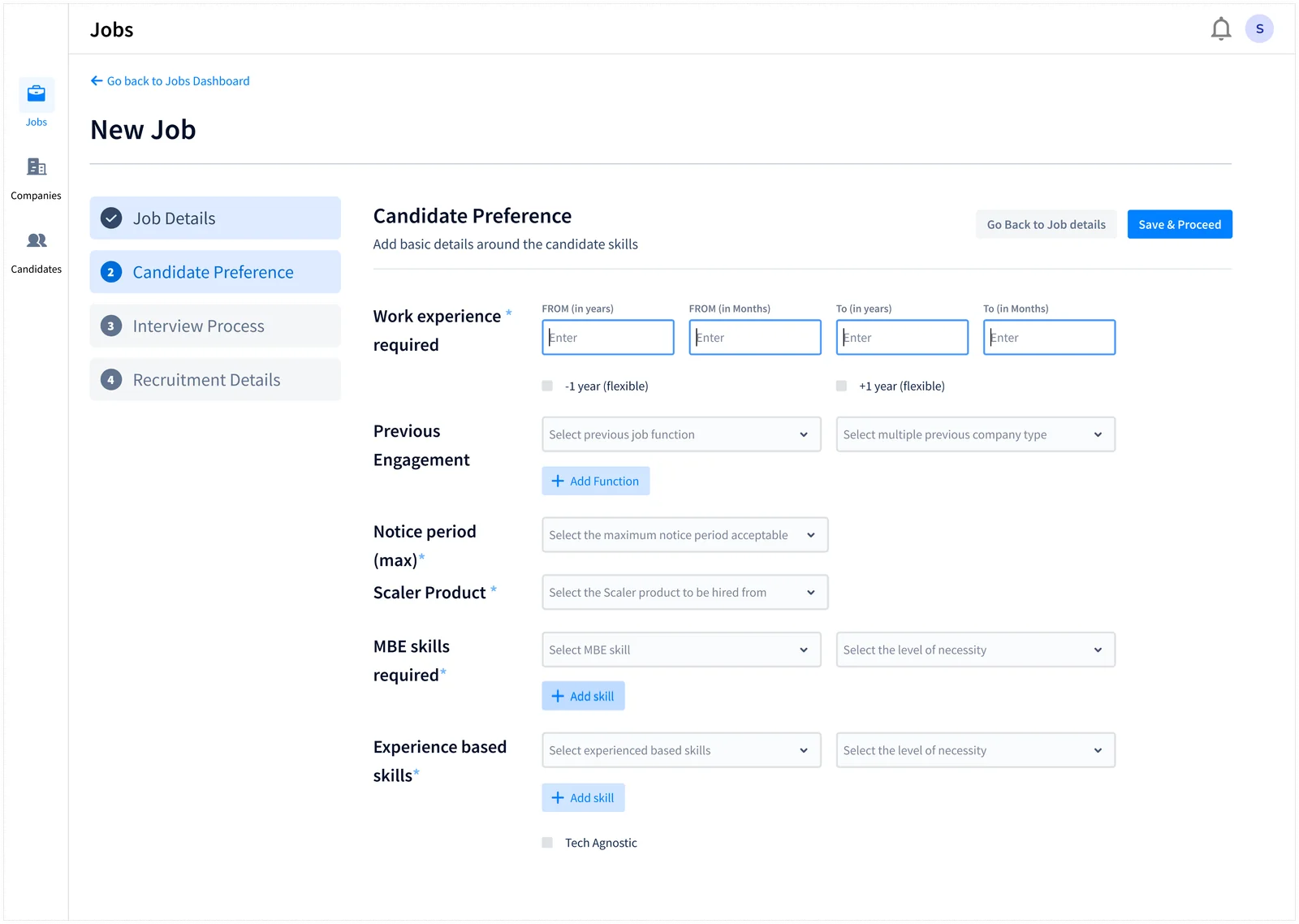
 Scaler
How do you make a 0→1 specialised ATS & Recruitment platform with a live pool of thousands of candidates?
Product design intern · Recruitment platform · 2023


How do you compete in streaming without subscriptions or originals?
Lead UX designer · Streaming · 2026