
Fandango
How do you compete in streaming without subscriptions or originals?
- Role
- Lead UX Designer, behavioral loop and ad UX
- Team
- 3 UX designers and 1 UX researcher, for Versant Media
- Timeline
- January to June 2026
Quick walkthrough of scenarios showing how the ecosystem creates new value
The one-minute version
The problem
Nobody knew Fandango at Home existed: a store that rents and sells films one at a time, with no subscription, no originals, and no reason to open it instead of Netflix.
What I designed
5 cross-platform interaction flows across Rotten Tomatoes, Fandango and Fandango at Home, for 2 user personas, within ad-supported monetization constraints.
My ownership
- 1The behavioral loop across the three products
- 2The ad experience
- 320+ interaction concepts, prototyped with AI-assisted workflows
- 4Testing with 10+ participants
Outcome
30+
Concepts tested
5
Concepts selected by Versant
10+
Participants tested with
The long version, about four minutes
Context
A movie store, asked to become a streaming platform.
Fandango at Home was built to sell and rent films one at a time. The brief was to turn it into an ad-supported service without losing the people who had spent years buying digital copies there. So the question was never what to build. It was what could make this platform worth choosing when it cannot compete on price, on library, or on anything made for it.
50M+
Monthly visitors across Versant's three products
Three hard constraints
Focus on AVOD
Ads are the business model. Ad experience needs to be optimized for watch time and conversion.
No subscriptions
Monetization through subscriptions was explicitly off the table.
No originals
The company cannot produce original content.
Findings
Users want ads last. The business needs them first.
Viewers wanted breaks in the last 30% of a film, where an interruption costs them least. The business needs them inside the first 70%, before the drop-off curve takes the audience with it. Both positions are correct and they do not overlap.
Some solutions that we explored for this problem
A subtle 3–5s countdown surfaces just before a break. The interruption stops being a surprise, the cognitive cost drops.
The maximum unskippable ad-length is set to 30 seconds by default to reduce user drop off and frustration.
Content window offers users some control over their ad-experience. Users feel agency without spending decision budget.
Strategy
Everyone knew Fandango. Everyone knew Rotten Tomatoes. Almost nobody knew Fandango at Home.
Worse: nobody knew the three platforms belonged to the same parent, Versant. It became apparent that the company didn't have a content problem, they had a handoff problem.

Decide
Attend
Re-Watch
No other business owns all three aspects of the entertainment ecosystem.
So we stopped designing a store and started designing an ecosystem.
Audience
18–34 years
Streaming‑first viewers.
Surfaces
TV · Laptop
Mobile as a strategic extension.
Content focus
Franchises
Invite continuation & cross‑platform return.
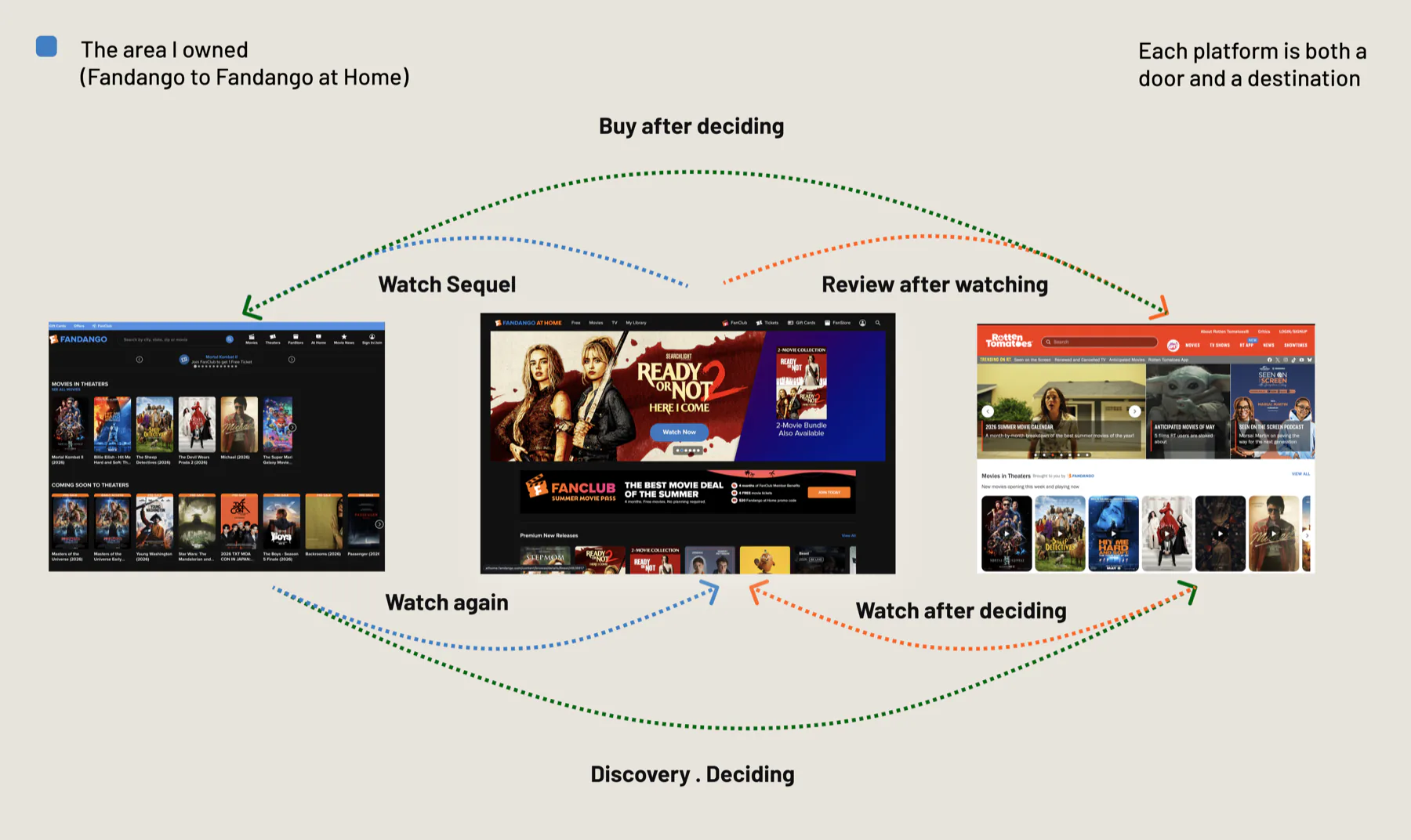
1Entry
A Rotten Tomatoes score, a Fandango ticket, a FaH film tile, each is a way in.
2Engagement
Predictable ads, social signal, mood-aware discovery, unique features that make users stay.
3Conversion
Watch, buy, save, share, rate, the action doesn't have to be a purchase.
The hook is "keep users inside the ecosystem". Each platform plays a different role in the same loop.
5 proposed connections to funnel users through the ecosystem
a.Choosing, on Rotten Tomatoes
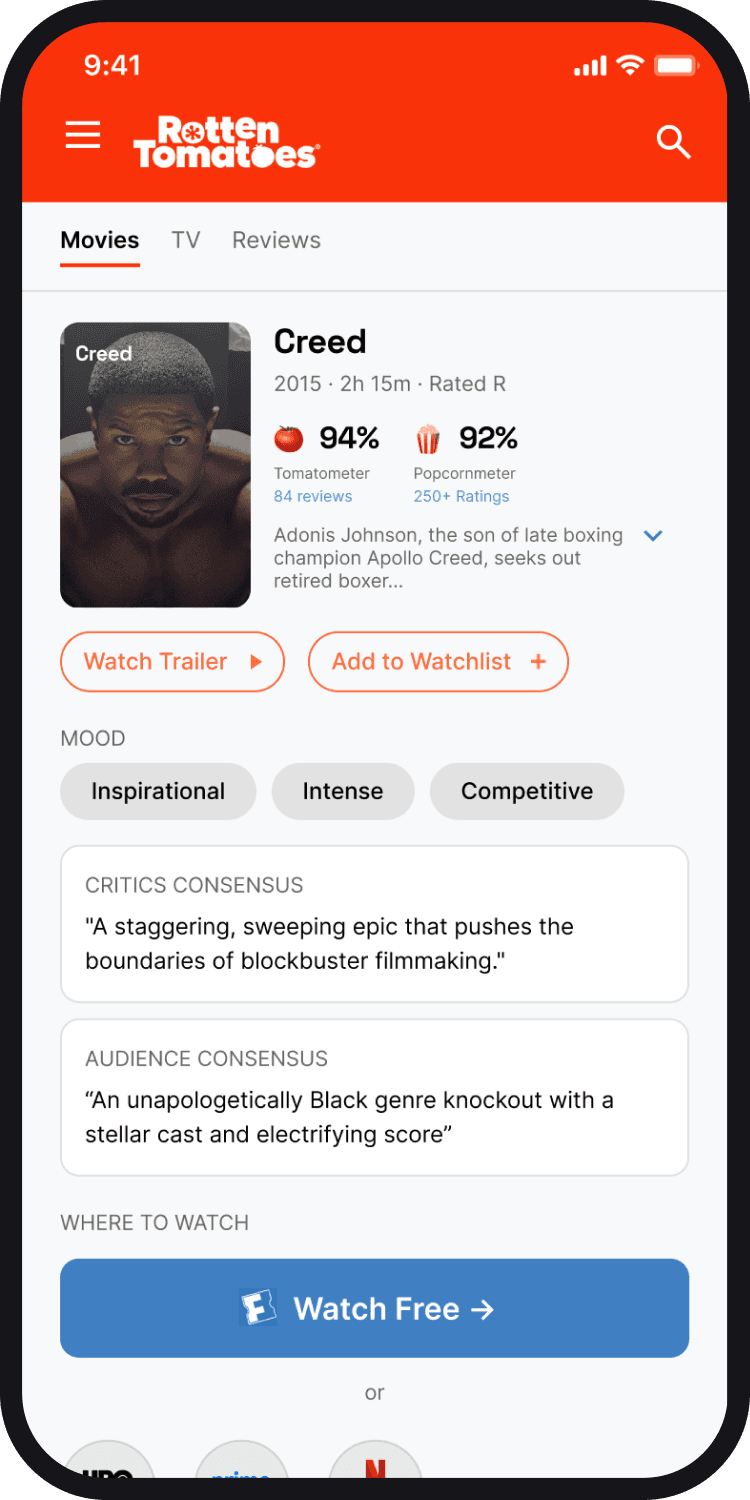
Rotten Tomatoes spotlights the platforms in the ecosystem.
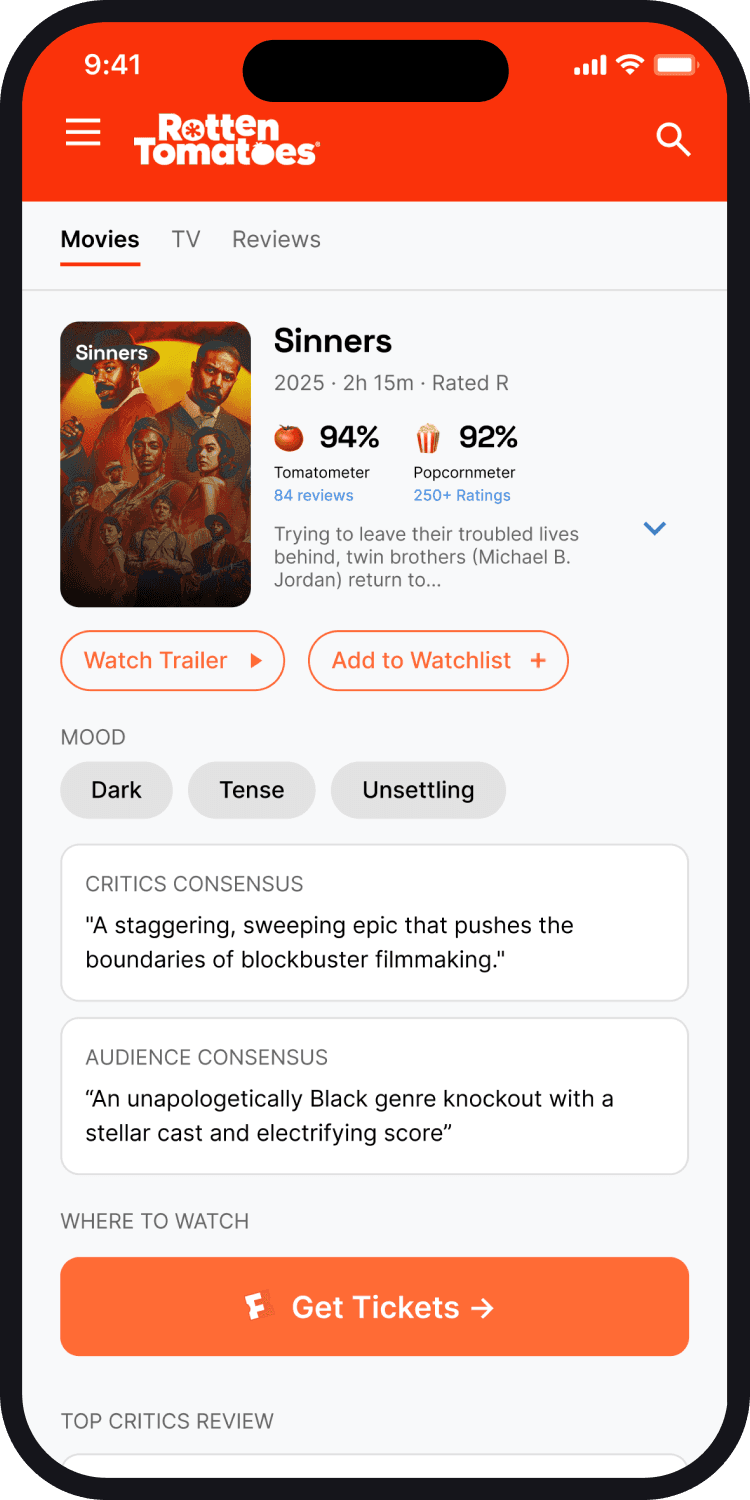
Rotten Tomatoes is where the decision actually gets made, and it is the one product of the three that everybody already uses. A viewer who has just read a 94% is holding the highest intent they will hold all evening, and the page currently spends it on nothing.
94% · 92%
Where to watch
The bridge appears as the intent peaks.
Search raises the two sibling platforms at the moment someone is already looking for the film.
b.Buying, on Fandango
Raise perceived value of conversion while buying tickets.
Give every Fandango ticket an added value by showcasing rewards that unlock on Fandango at Home. This creates a unique purchase incentive while strengthening the connection between both platforms.
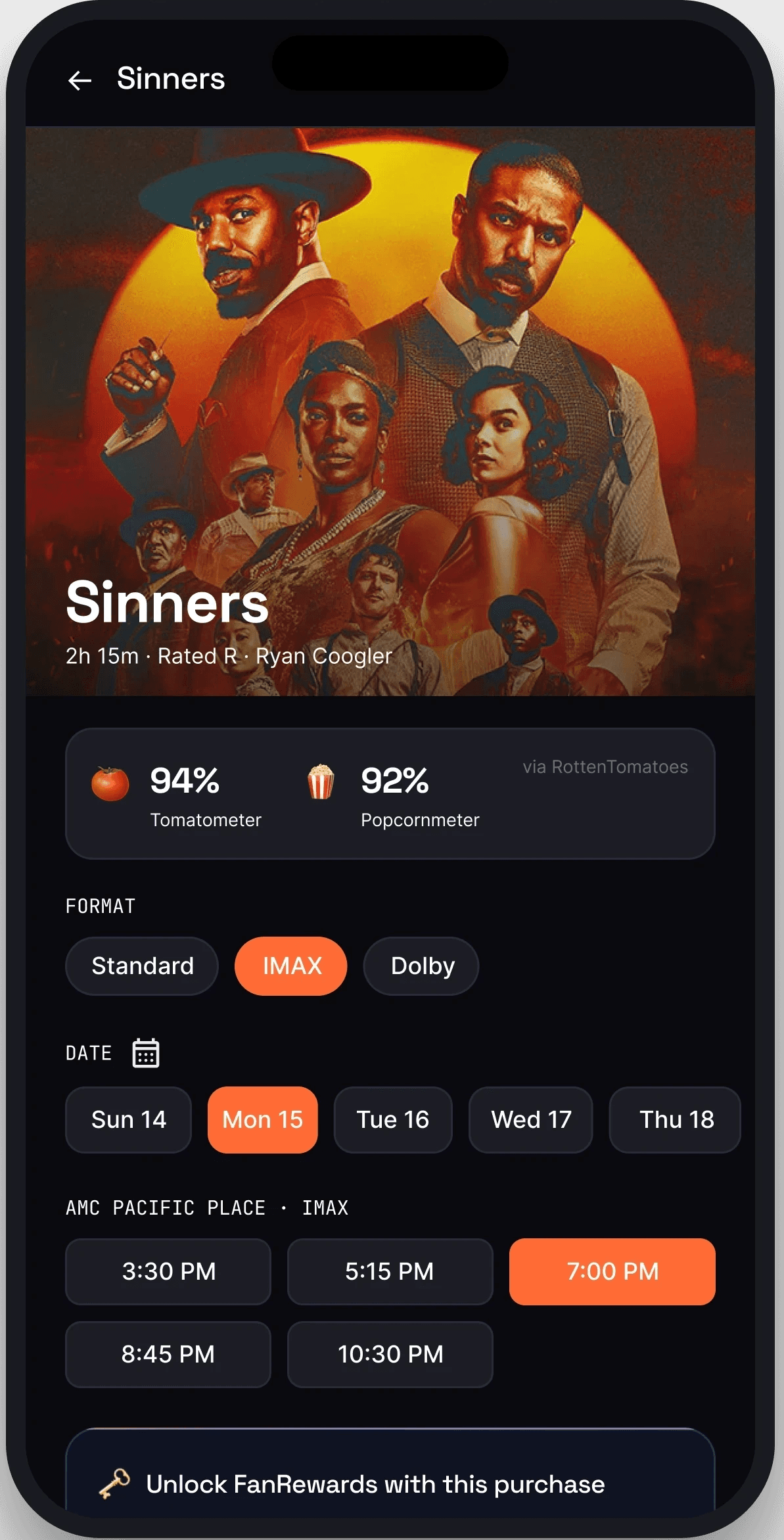
AMC Pacific Place · IMAX
Unlock FanRewards with this purchase
Rewards are teased before checkout so that the promise forms while the user is still choosing.
Incentive shown as soon as the user comes to the platform.
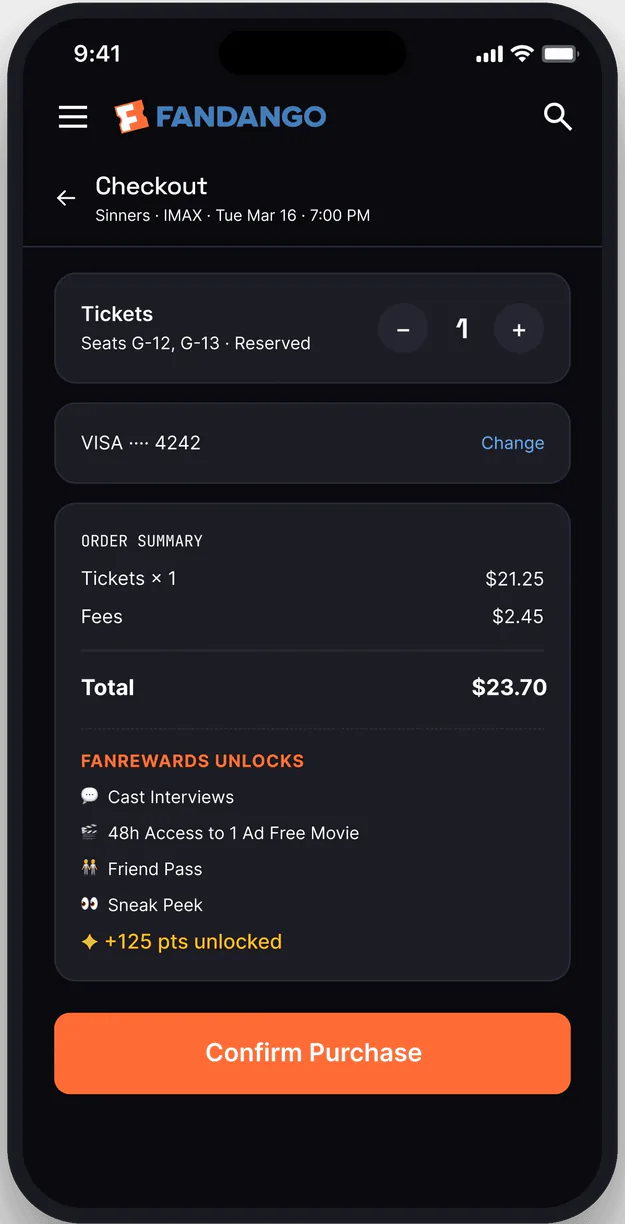
Order summary
FanRewards unlocks
+125 pts unlocked
The unlock list sits between the total and the CTA to raise the perceived value.
Show users the actual awards that can be unlocked instead of just points.
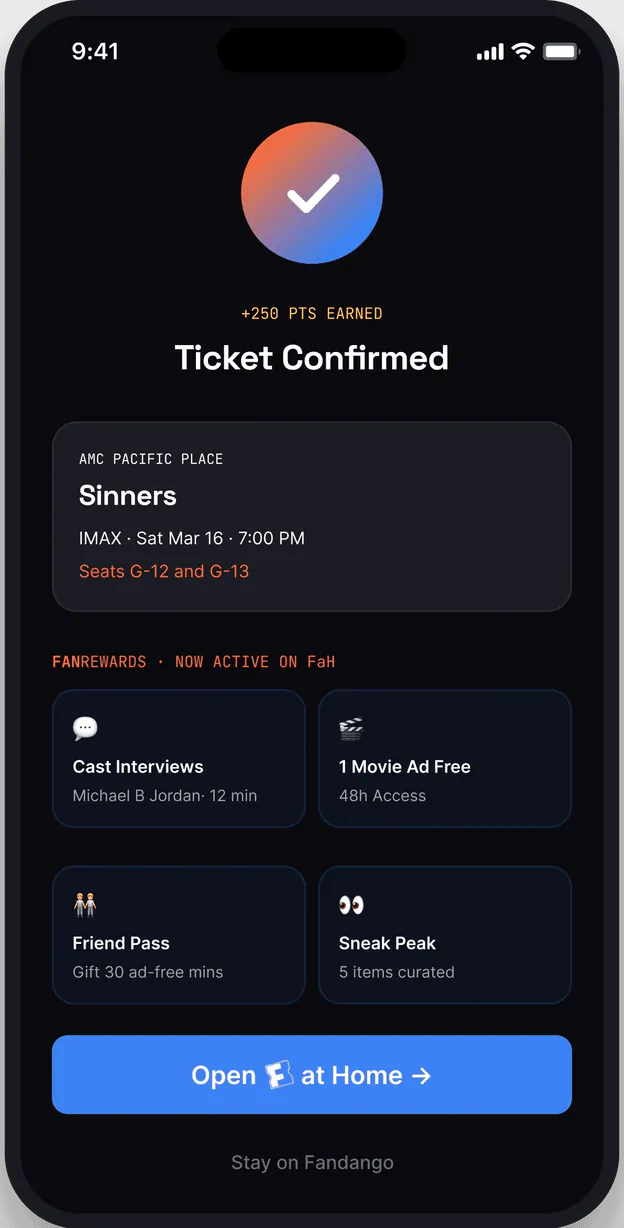
+250 pts earned · Ticket confirmed
12 MIN
48H ACCESS
GIFT 30 MIN
5 PICKS
Rewards are accessible at Fandango at Home, making this the next product's front door too.
This is a unique value created by the ecosystem of products.
Name rewards that a fan can picture
FanRewards unlocks
+125 pts unlocked
Value is stated at the exact moment the user weighs the ticket price against walking away.
c.Waiting, on Fandango at Home
Fandango at Home turns the wait time into a ritual.
Between booking a ticket and sitting down for it there are usually a few days, and nothing is built for them. At Home already knows the film and the showtime, so it can open on a short playlist made for that specific screening instead of on a catalogue the viewer has to work through.
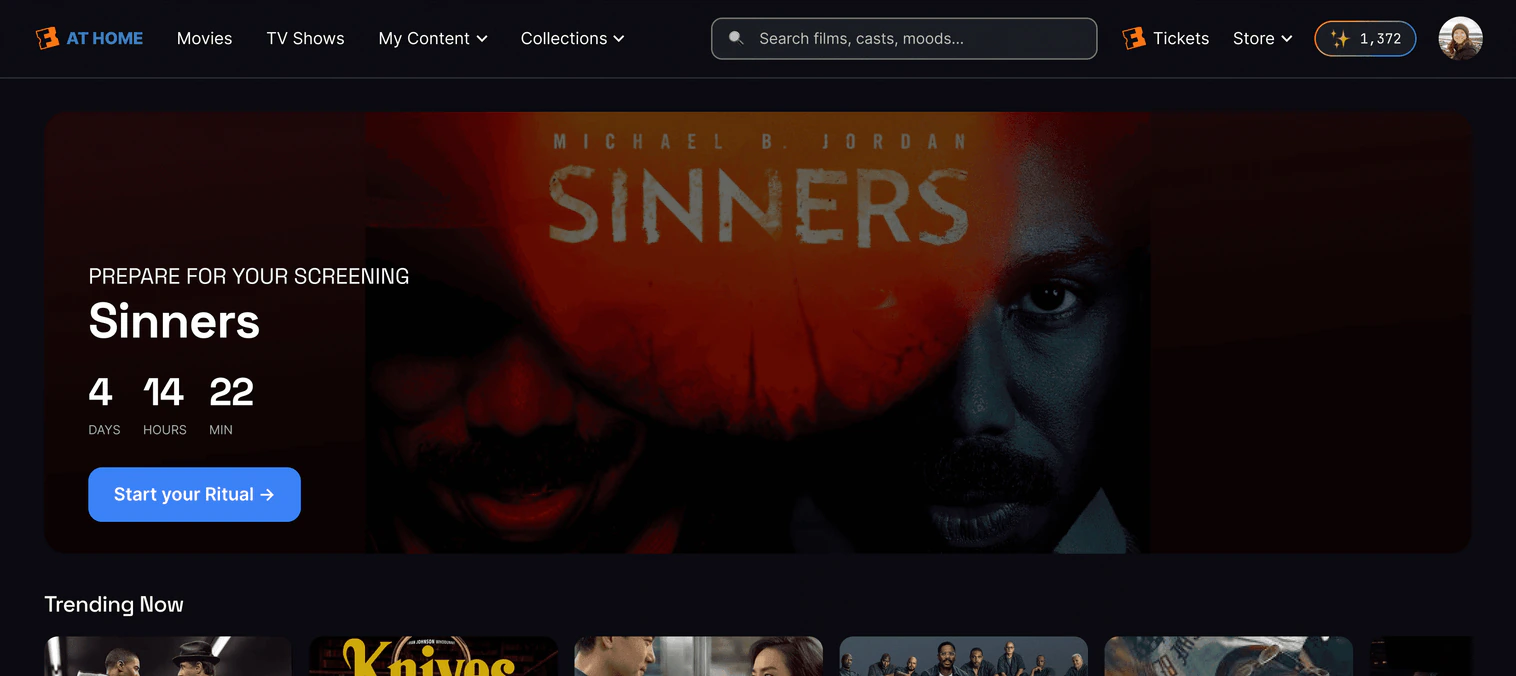
When users arrive on “At Home”, the platform already knows what they bought and when it's showing, and has built them a playlist of related titles along with their rewards before they even ask.
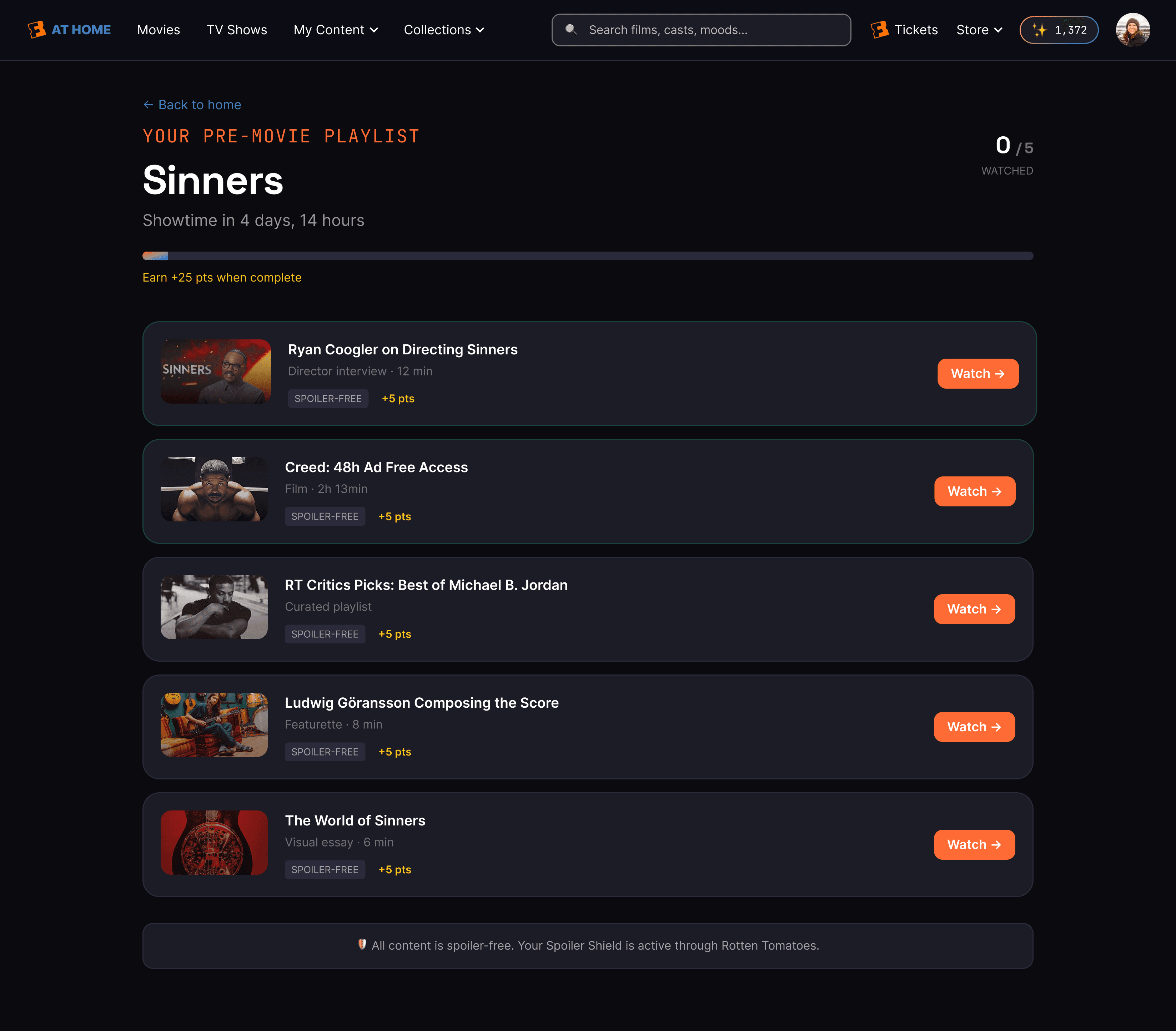
The unlocked rewards live here, which is what gets the viewer through the door. What keeps them is that the playlist is five things long rather than a catalogue.
Ticket confirmed
+250 pts earned
Prepare for your screening
4
DAYS
14
HOURS
22
MIN
Your pre-movie playlist
0/5 watched · +25 pts on complete
The ticket is confirmed and the user is shown a CTA to access rewards on “At Home”
FAH already knows the user's show timings. It's the highest-anticipation window the platform will ever get with this user.
“Start your Ritual” replaces an open-ended catalog with a single, personal next step.
d.After the credits
The end credits are the only moment a viewer is satisfied and still watching.
Openness to a next step
Browse
Deciding · Guarded
Watch
Locked in · Unreachable
Credits
Satisfied · Receptive
Exit
Gone
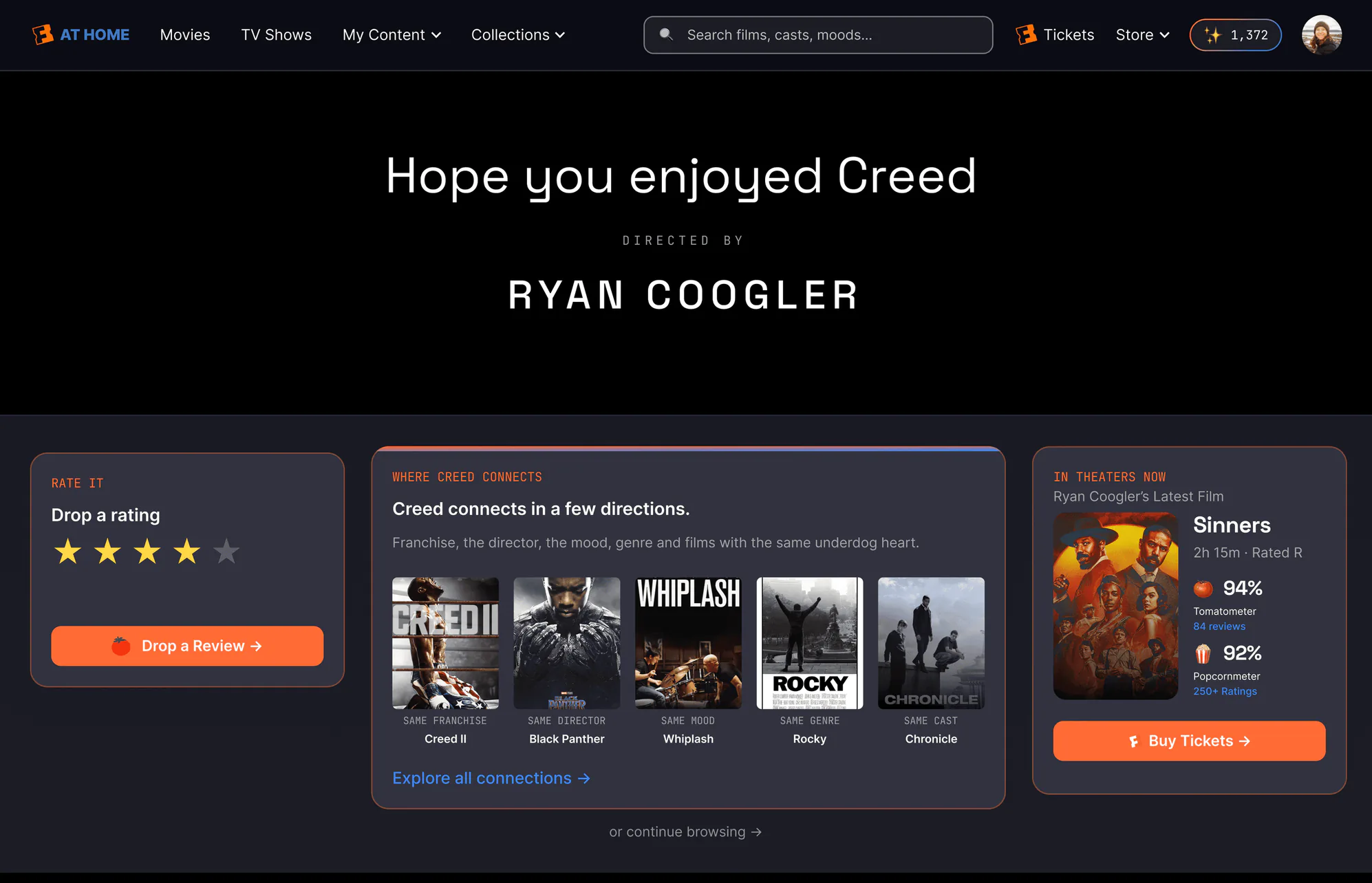
Rate it
Where it connects
Explore all connections →
In theaters now
2h 15m · Rated R · 94% · 92%
Feeds Rotten Tomatoes
Deepens Fandango at Home
Returns to Fandango
e.Across all three
Every platform stamps the same Passport.
Of the five, Cinematic Passport got the most buy-in from senior stakeholders at Versant.
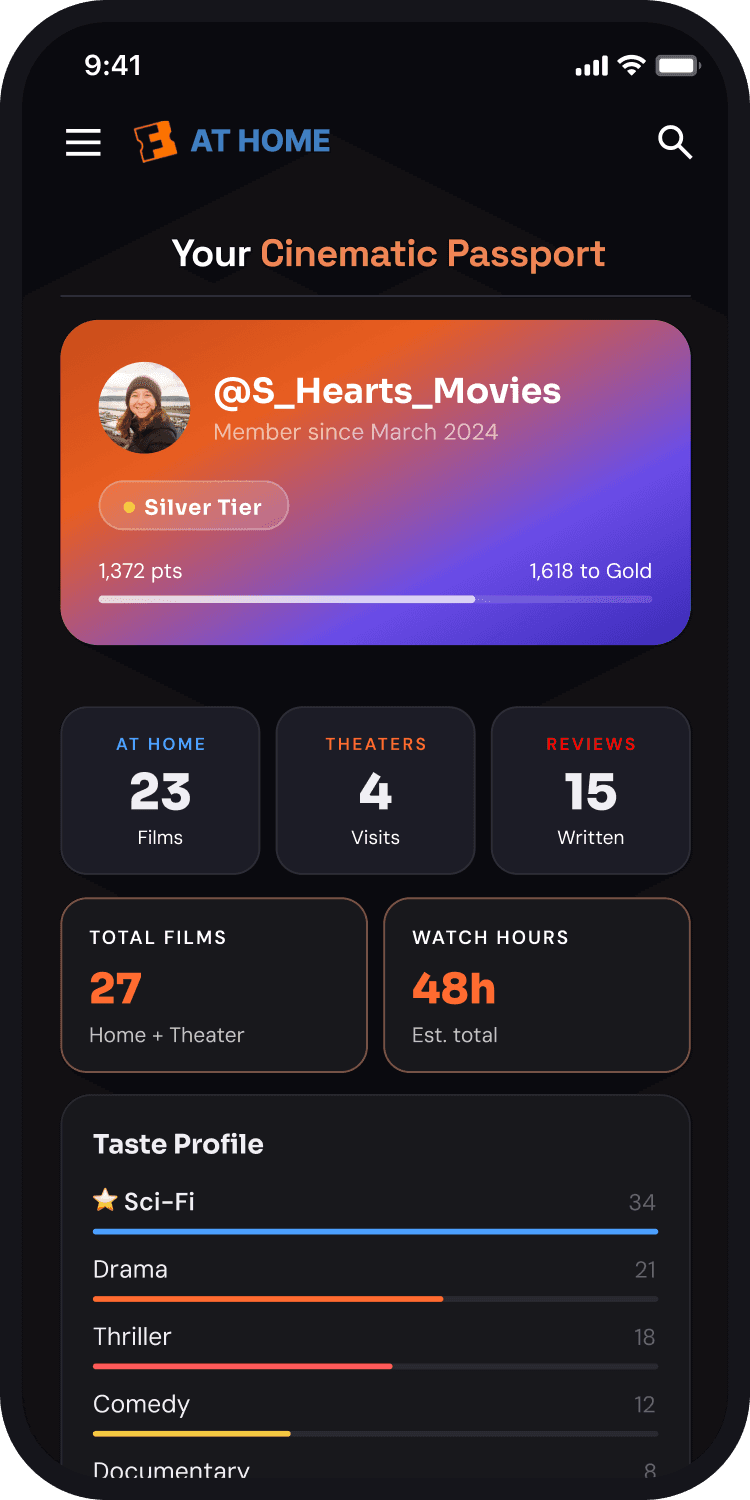
Member since March 2024
1,372 pts
At home
Films
Theaters
Visits
Reviews
Written
Total films
Home + theater
Watch hours
Est. total
Outcome
5 high-fidelity concepts validated with senior stakeholders at Versant. Cinematic Passport got the most buy-in.
30+
Concepts tested
5
Concepts selected by Versant
10+
Participants tested with
Reflection
1. The work turned out to live in the handoffs
Every proposal that worked lives in the gap between two products: the score that becomes a ticket, the ticket that becomes a playlist, the credits that become a review. None of them is a feature you could brief on its own, and none would have surfaced from looking at any one platform.
2. We were slow to put concepts in front of people
As a student team we had almost no confidentiality constraints and could have tested weekly. We reached for peers and volunteers late, after the direction was set, which meant the feedback tuned the work rather than steering it.
More work
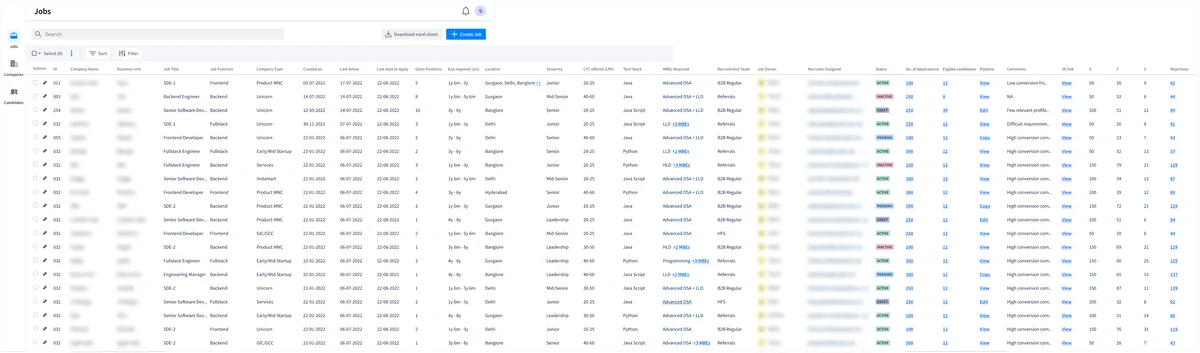
 Scaler
How do you make a 0→1 specialised ATS & Recruitment platform with a live pool of thousands of candidates?
Product design intern · Recruitment platform · 2023
What if your feed was bounded by your legs, not an algorithm?
Sole product designer · Location-based social · 2024